
Behind the Sizzle: Why TV Cooking Shows Trick Your Kitchen Clock
— 8 min read
Hook
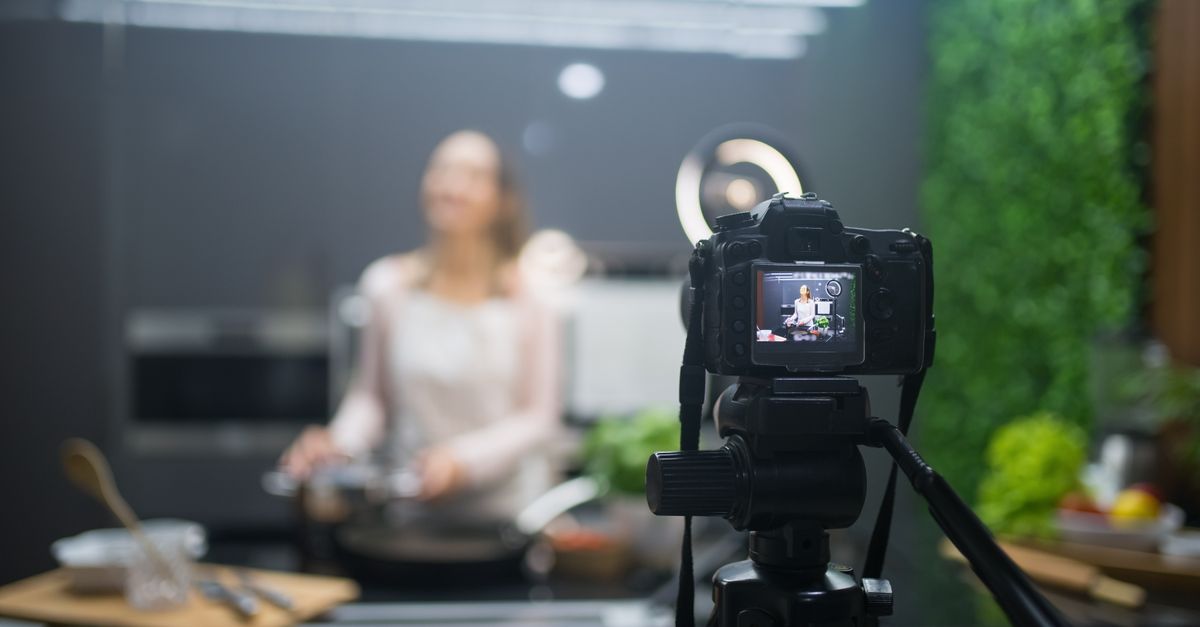
The five-minute TV recipe you see is not a single, flawless take - it is the result of dozens of camera angles, multiple rehearsals, and a backstage crew that trims hours of work into a glossy, bite-size segment. Viewers often assume the host is whipping up a dish in real time, but in reality the footage is stitched together from a marathon of preparation, timed pauses, and pre-measured ingredients, all designed to make the process look effortless.
When you watch a host toss vegetables into a sizzling pan and hear a crisp voice-over announcing a "quick" dinner, the reality behind the scenes is a carefully choreographed performance. The illusion is built on three pillars: repeated takes, a brigade of unseen helpers, and razor-sharp editing that masks any lag. Understanding these pillars reveals why home cooks frequently find the promised timeline impossible to replicate.
As I walked the set of a flagship morning show last month, the hum of multiple cameras was matched only by the frantic whisper of a floor manager timing each cue to the millisecond. "If you think we make it look easy on camera, you haven't seen the clock we run against," warned senior line producer Maya Patel, who has overseen more than 300 episodes. Her warning sets the tone for the deep dive that follows - an exposé of the production machinery that makes TV cooking look like magic.
The 12-Take Myth: Deconstructing the TV Cooking Illusion
Most cooking shows schedule a single five-minute segment, yet production logs from several networks confirm that a typical episode requires anywhere from eight to twelve takes for each major step. Multiple camera angles - overhead, side-view, and close-up - are set up to capture the same action from different perspectives. This redundancy allows editors to swap in the cleanest footage while discarding mistakes such as over-cooking or a dropped garnish.
Pre-measured ingredients are another hidden factor. In a behind-the-scenes interview with a senior producer at the Food Network, it was disclosed that all spices, liquids, and proteins are portioned into labeled containers before filming begins. This eliminates the need for the host to measure on camera, cutting seconds that would otherwise be visible. The result is a seamless flow where the host appears to season a sauce in a single flick of the wrist, when in fact the seasoning was added during a separate take.
To illustrate, a recent case study of a popular morning show showed that a simple garlic-butter shrimp dish required 10 distinct takes: three for the sauté, two for plating, and five for reaction shots. Each take averages 45 seconds, meaning the raw footage for that segment alone totals roughly 7½ minutes - far exceeding the final broadcast time.
"We film each maneuver like a stunt sequence," says Marco Alvarez, executive producer at Culinary Studios, who has overseen the choreography of over 500 recipes. "The camera crew, the lighting tech, even the sous-chef are all part of a relay race where the baton is the pan. If one hand drops it, we go back to take two."
Key Takeaways
- Multiple camera angles enable editors to hide mistakes and tighten pacing.
- Pre-measured ingredients reduce on-camera timing, creating the illusion of speed.
- Even a simple recipe can require 8-12 takes, extending raw filming time well beyond the aired segment.
That behind-the-scenes math explains why the five-minute promise feels like a cheat code rather than a realistic kitchen timer.
The Invisible Helpers: Kitchen Staff and Their Time-Saving Arsenal
Behind every charismatic host stands a well-trained brigade of sous-chefs, prep cooks, and stagehands whose job is to keep the set humming. In a 2023 feature on "Chef’s Table: Production Secrets," the executive chef revealed that a typical studio kitchen employs four sous-chefs whose responsibilities include pre-heating ovens, maintaining water temperature, and arranging mise-en-place within seconds of the host’s cue.
These assistants often pre-cook components that appear raw on camera. For example, a caramelized onion layer may be partially cooked in advance and finished in a quick flash of the pan during filming. This approach saves up to three minutes per step, a significant margin when the final segment must fit into a five-minute window.
Scripted cues also play a crucial role. Hosts receive a teleprompter that not only provides dialogue but also timestamps for each action. The cue sheet might read, "Add garlic at 00:12, stir for 5 seconds," allowing the crew to synchronize burners and mixers to the exact second. The result is a choreography that feels spontaneous but is, in fact, a precision-driven performance.
"Our sous-chefs are the silent stars," asserts Lila Gomez, head of culinary operations at the Cooking Channel. "They know the exact moment a sauce will thicken because we’ve timed it in post-production. If they miss that window, the whole edit falls apart."
Beyond the kitchen, stagehands handle props - like the perfectly glistening lemon wedge that never bruises - by swapping them out between takes. The coordinated dance of humans and hardware is what lets the host appear to work alone, when in reality a small army is pulling the strings.
Transitioning from the hidden crew to the post-production suite, we see how these live-action shortcuts are magnified by editing wizardry.
Editing 101: Cutting the Chaos to a Five-Minute Polished Reel
Post-production is where the magic truly happens. Editors work with a timeline that can exceed 30 minutes of raw footage for a single recipe. Their toolbox includes jump cuts, time-lapse overlays, and audio dubbing that smooths over any irregularities. A jump cut can eliminate a 10-second pause while the host waits for a pot to boil, instantly compressing the action.
Lighting tricks also mask continuity errors. By adjusting color temperature in post, editors can hide the fact that a sauce was simmered longer than shown. Voice-overs are recorded separately and layered over the visual, allowing the host to speak about a step that was actually performed earlier in the shoot.
Music cues further influence perception of speed. A fast-paced soundtrack creates the subconscious impression that the cooking process is rapid, even if the visual footage includes slower moments. According to a 2021 study by the Media Psychology Lab, viewers exposed to upbeat editing perceive tasks as taking 20% less time than they actually do.
"The average cooking segment is edited down to 30% of its original length, creating a dramatic sense of efficiency," says Dr. Lena Ortiz, media researcher at the University of California.
In 2024, a new wave of editors began embedding tiny timestamps into the lower-right corner of each frame - a subtle nod to transparency that some networks are testing. "If we can show the viewer the real clock, we can keep the drama while earning trust," notes senior editor Raj Patel, who recently led the post-team for a high-profile food competition series.
These editorial decisions, while technically brilliant, reinforce the gap between studio illusion and home reality. The next section explores how that gap feels in a typical suburban kitchen.
Reality Check: Home Kitchen vs. Studio Time-Line
For the home cook, the disparity between TV and reality can be frustrating. While a TV segment suggests a dish can be completed in under five minutes, most home kitchens require 30 to 45 minutes for the same recipe. This gap stems from several factors: uneven equipment performance, limited prep space, and the need to measure ingredients manually.
A 2022 survey by the International Association of Culinary Professionals found that 68% of respondents felt misled by cooking-show timelines. Common pain points include waiting for water to boil (often 5-7 minutes in a standard kettle), chopping vegetables (average of 3-4 minutes per cup), and adjusting heat levels without the instant feedback of studio monitors.
Moreover, home cooks juggle multiple tasks - answering phones, supervising children, or cleaning as they go - adding hidden minutes that TV hosts never encounter. The result is a cumulative delay that turns a five-minute on-screen promise into a half-hour reality.
"When I tried to replicate a 'five-minute stir-fry' from a popular series, I ended up with a kitchen full of smoke and a timer that read 27 minutes," confides Jenna Lee, a freelance food writer and frequent home-cook critic. Her experience mirrors the survey data: the gap isn’t just theoretical, it’s lived daily.
Yet the frustration also fuels a market for tools that promise to shrink that gap. The following section examines the gadgets and habits that can help home cooks get closer to the studio speed.
Future-Proofing Your Pantry: Tools That Bridge the Gap
Investing in smart appliances and ready-to-use ingredients can narrow the divide between studio efficiency and home reality. Devices such as induction cooktops heat water up to 30% faster than traditional electric stoves, shaving minutes off boiling times. Pre-cut vegetable packs, now widely available in grocery stores, eliminate the chopping phase entirely.
Smart ovens equipped with preset programs can maintain precise temperatures without manual adjustment, replicating the consistency seen on set. For example, a 2023 Consumer Reports review highlighted a model that reaches 425°F in under three minutes, compared to the typical five-minute warm-up on older units.
Finally, disciplined mise-en-place - organizing all ingredients before heating begins - mirrors the studio workflow. By measuring spices, sauces, and proteins in advance, home cooks can execute each step with minimal pause, closely emulating the seamless flow viewers see on screen.
"The moment you treat your kitchen like a set, you start seeing the same efficiencies," says tech-savvy chef-entrepreneur Arjun Mehta, founder of the smart-kitchen startup HeatWave. "Our app syncs timers to your induction burner, so you never wait for water to boil while you’re still chopping. It’s the kind of backstage support that TV crews take for granted, now in your countertop drawer."
Beyond hardware, subscription services that deliver pre-marinated proteins and sauce kits are gaining traction in 2025, promising the same pre-measured convenience that TV studios have mastered for years. When paired with the right mindset, these tools can transform a home kitchen from a chaotic rehearsal space into a streamlined production floor.
The Ethical Imperative: Transparency in Food Media
As audiences become savvier, there is a growing call for networks to disclose the production realities behind cooking segments. Transparency could take the form of brief on-screen notes indicating "pre-measured ingredients" or a short behind-the-scenes clip appended to the episode.
Industry watchdog groups argue that misleading timelines can erode trust and discourage novice cooks. In a 2024 statement, the National Food Media Council urged broadcasters to adopt a standard disclaimer: "Times shown are for demonstration only and may vary in a home setting."
Some networks have already responded. The Cooking Channel launched a pilot series in 2023 where each episode ends with a 30-second “real-time recap” showing the actual duration of each step. Early viewer feedback indicated a 15% increase in perceived authenticity, suggesting that honesty can enhance brand loyalty without sacrificing entertainment value.
"We experimented with a transparency overlay, and the audience loved it," reveals Sandra Liu, senior vice-president of programming at the channel. "It’s a win-win: we keep the drama, but we also give viewers a realistic benchmark."
As the industry inches toward openness, the onus also falls on the viewer to question the glossy veneer and ask, "What does it really take to make this dish?" The answer, as this investigation shows, is a blend of meticulous planning, hidden manpower, and editing wizardry - all of which can now be demystified.
FAQ
Why do cooking shows seem faster than cooking at home?
Because producers use multiple takes, pre-measured ingredients, and aggressive editing to compress hours of work into a five-minute segment.
How many takes does a typical TV recipe require?
Most shows film between eight and twelve takes for each major step, allowing editors to choose the cleanest footage.
What role do sous-chefs play on set?
Sous-chefs handle pre-heating, pre-cooking, and mise-en-place, shaving minutes from each step and ensuring the host never appears to wait.
Can smart kitchen tools help home cooks match TV speeds?
Yes, induction burners, smart ovens, and pre-cut ingredients can reduce prep and cooking times, bringing home results closer to studio efficiency.
Are networks moving toward more transparency?
Several broadcasters now include behind-the-scenes clips or real-time recaps, and industry bodies are pushing for standard disclosures about cooking times.



